We are quick to oppose the head and the hand: on one side those who think, on the other those who do. Anyone who has ever bent a sheet of steel, fitted an assembly, or sanded a tabletop knows that this boundary does not exist. The hand thinks. It measures, compares, corrects, often before the mind has found its words. This is what we call manual intelligence.
It has something discreet about it. It does not show itself, it does not always explain itself. We recognize it by what it leaves behind: a clean line, a smooth surface, an object that seems to have always existed.
A very old question
In The Parts of Animals, Aristotle reports Anaxagoras's idea: man is the most intelligent of animals because he has hands. He reverses the proposition: it is because he is the most intelligent that he was given hands, a tool that is worth more than all the others. More than two thousand years later, the question remains open, and that is perhaps the best answer: the hand and the mind move forward together, without anyone really knowing which guides the other.
In the XXth century, art historian Henri Focillon devoted a brief and luminous text to the hand, In Praise of the Hand, which appears as an appendix to The Life of Forms. In it, he treats the hand as an invention comparable to those of fire and the wheel, as its publisher summarizes.
There is a kind of modesty in this idea. Before machines, before plans, there was this: five fingers, a palm, and the desire to give form to what did not yet have any.
Thinking by doing
In 2010, two books translated into French put the hand back at the center of the debate. Sociologist Richard Sennett published What the Hand Knows: The Culture of Craft with Albin Michel; philosopher Matthew Crawford, who left an intellectual position to repair motorcycles, wrote In Praise of the Carburetor: An Essay on the Meaning and Value of Work with La Découverte. Crawford contests the idea that thinking and doing can be separated, and reminds us that one of the main sources of pride in work is "the complete execution of a task," as La Vie des idées points out. For him, know-how is not learned from a manual: it is formed through contact with concrete situations, materials, and those who know.
Thinking by doing means accepting that you do not know everything in advance. It means letting the material respond, then adjusting. The gesture becomes a conversation, made of trials, silences, and revisions.
At the manufacture, the hand that judges
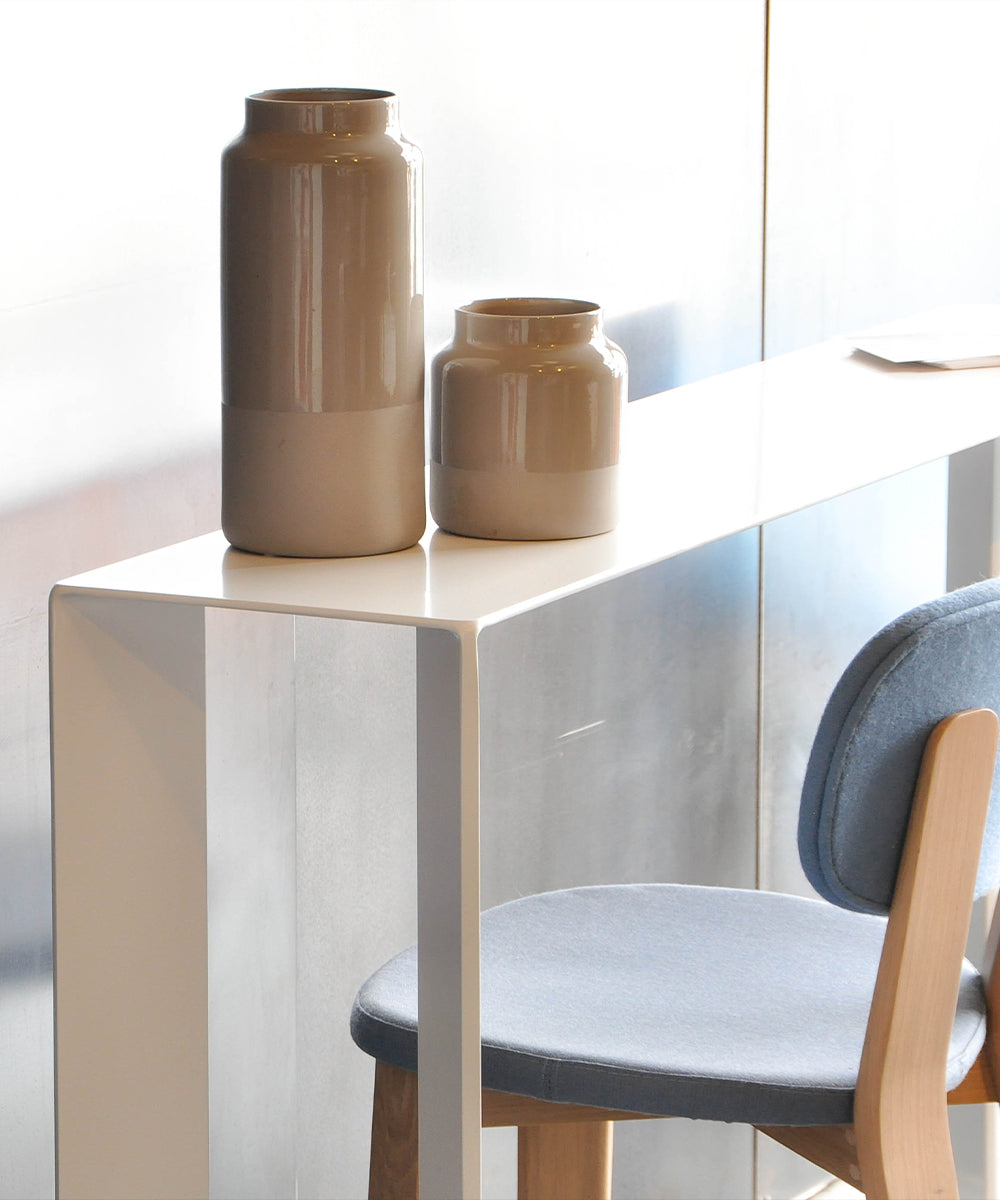
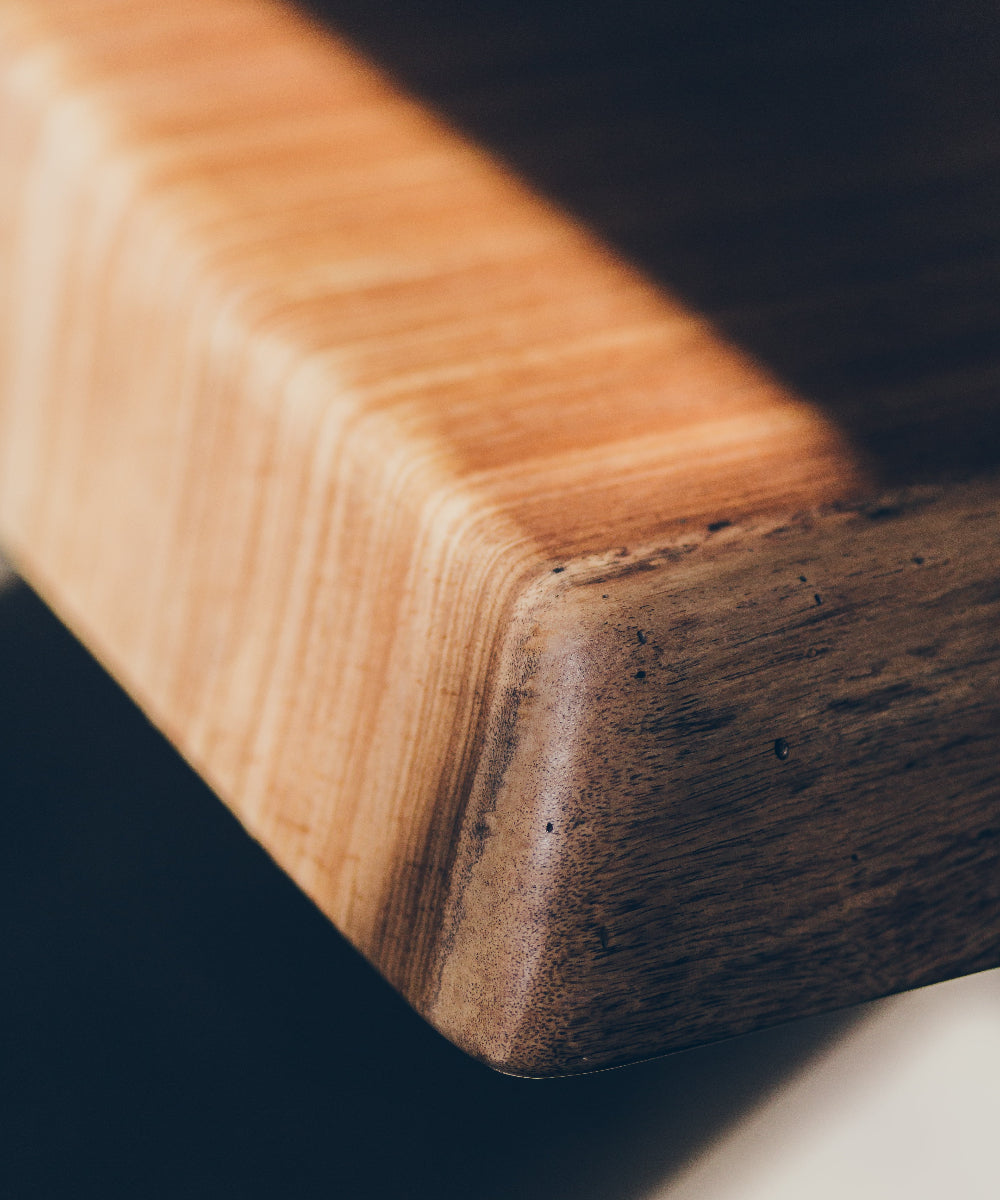
Bending steel means feeling the moment when the sheet gives. Sanding a solid wood tabletop means reading the grain under the palm. An edge that is too sharp, a poorly revealed grain, a surface that is not quite matte: the hand often perceives it before the eye. No template can replace this dialogue between gesture and material.
This judgment cannot be improvised. It is born from repetition, attention, and a certain humility before what one works on. We learn to listen to a material as we learn to listen to someone: by giving it time to speak.
Since 2006, the Blunt France manufacture has been handcrafting, in Biarritz, pieces signed and dated the year of their creation. This signature is not an ornament: it is the trace of a judgment, that of a hand that decided the piece was right.
Emotional intelligence, the other half of the gesture
At Blunt France, manual intelligence never goes alone. It has a sister, even more discreet: emotional intelligence. It is the one that asks what a piece will make someone feel. What peace will a table around which a family gathers offer, what assurance will a desk give, what calm will a bookcase bring to a room that is too full.
The hand knows how to make; the heart knows for whom. One seeks the right line, the other the right emotion. Together, they compose our vision: well-made objects, but above all objects that touch, that soothe, that bring people together. Without the first, the piece would be fragile. Without the second, it would be mute.
What the hand transmits
Manual intelligence does not stop at manufacturing. It continues with the one who touches the piece, experiences it, passes it on. A hand rests on a tabletop, follows an edge, recognizes a texture: something of the initial gesture then passes from one to the other, without a word.
This is why each piece is accompanied by its certificate of authenticity, and why we offer a sample kit: to feel the steel and wood in the hand before choosing. To continue reading: The Workshop, or the Time of Gesture, and our history, since 2006.
The raw timeless elegance.